
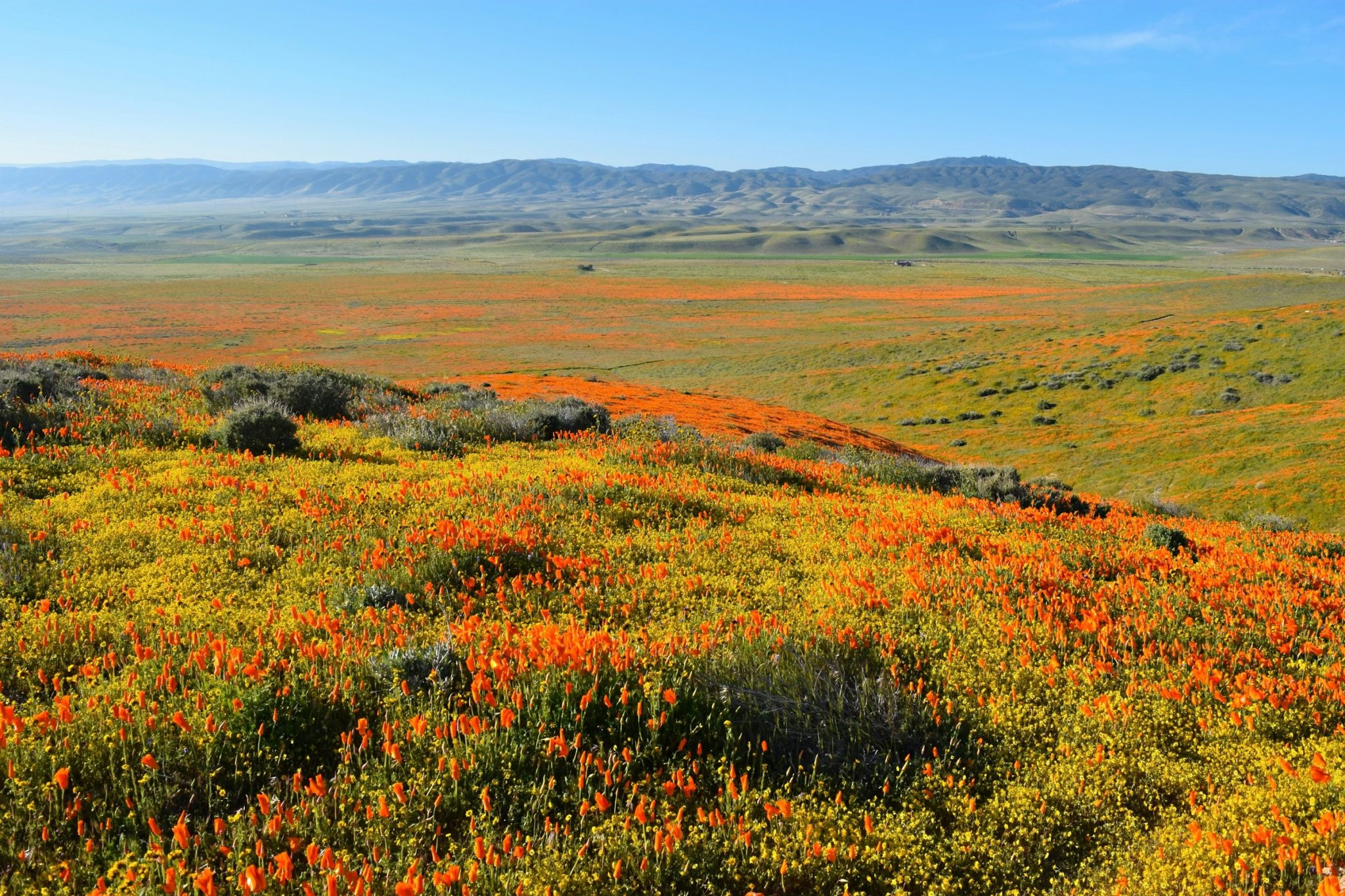
You’ve seen the photos. Orange hillsides so bright they look filtered. Purple lupine stretching to the horizon. Families standing knee-deep in poppies, arms spread wide, capturing that perfect shot.

What those photos don’t show: the three-hour traffic backup on the 15. The parking lot that filled at 6 AM. The trampled flowers along every path where someone decided the “stay on trail” signs didn’t apply to them.
California’s super bloom draws millions of visitors when conditions align. The famous spots get crushed. But this state has 163,696 square miles, and the wildflowers don’t care about Instagram. They bloom where the rain falls and the soil suits them, which means spectacular displays happen in places most people never think to look.
I’ve been chasing wildflowers for fifteen years, often with kids in tow and limited patience for crowds. These five spots deliver without the chaos. For comprehensive timing and the full 2026 outlook (spoiler: it’s complicated this year), check out this detailed California super bloom guide.
1. North Table Mountain Ecological Reserve
Location: Oroville, Northern California
Peak Bloom: Early March through mid-May
Best For: Families, photographers, anyone who wants space
This basalt plateau looks like someone dropped a piece of the moon into NorCal farmland. The flat volcanic rock creates shallow pools after rain, and wildflowers colonize every crack and depression. Lupine, poppies, shooting stars, and dozens of species you won’t find anywhere else.
The landscape itself is strange and beautiful. Kids love scrambling across the rock formations. Photographers love the unusual foreground options. And because it’s a three-hour drive from the Bay Area rather than a quick day trip, crowds stay manageable even on weekends.
Bring layers. The plateau sits exposed with no shade, and spring weather up here swings wildly.
2. McGee Creek (Eastern Sierra)
Location: South of Mammoth Lakes
Peak Bloom: Late May through July
Best For: Hikers, high-elevation variety, dramatic backdrops
While everyone rushes the desert blooms in March, the Eastern Sierra quietly waits. By late May, when lower elevations have browned out, McGee Creek hits its stride. Tiger lilies along the creek. Lupine carpeting the meadows. Paintbrush adding splashes of red against granite.
The timing works beautifully for families with school-age kids. Desert blooms happen during the school year. This peaks as summer starts.
The trailhead sits at 8,000 feet, so check conditions before driving. Snow can linger into June. But when it melts, the water feeds some of the most spectacular wildflower meadows in the state.
3. Folsom Lake’s Beeks Bight
Location: Folsom, near Sacramento
Peak Bloom: Mid-April to early May
Best For: Locals, easy access, blue lupine specifically
Sacramento residents know this spot. Everyone else drives past it heading to Tahoe or the coast. Mistake.
Beeks Bight produces some of the most extensive blue lupine displays in Northern California. Not mixed with other colors. Just rolling hills of purple-blue that photograph like something from a dream. The contrast against the lake adds another element most super bloom spots lack.
It’s a state recreation area, so there’s parking and facilities. The trail system lets you choose your distance. And because it sits in Sacramento’s backyard rather than on the tourist circuit, weekday visits feel almost private.
4. Bridgeport Valley and the Bodie Hills
Location: Eastern Sierra, near the Nevada border
Peak Bloom: June through early July
Best For: Road-trippers, ghost town enthusiasts, solitude seekers
Combine wildflowers with a trip to Bodie State Historic Park, California’s best-preserved ghost town. The valley blooms with lupine, mule ears, and dozens of high-desert species while the Bodie Hills add sage and rabbitbrush to the mix.
This is remote California. The kind of place where you might not see another car for twenty minutes. Cell service disappears. The landscape opens up. And the flowers bloom for an audience of almost nobody.
The drive itself rewards attention. Pull over anywhere the color catches your eye. Nobody’s waiting behind you.
5. Pinnacles National Park
Location: Between Salinas and Fresno
Peak Bloom: February through April (varies by trail elevation)
Best For: Hikers, rock formations, wildflower variety
California’s newest national park gets overlooked because it lacks the name recognition of Yosemite or Death Valley. That’s a feature, not a bug.
The volcanic rock formations create microclimates, so different flowers bloom at different elevations throughout spring. Baby blue eyes carpet the lower trails in February. Clarkia and larkspur take over higher ground by April. The cave trails add adventure for kids who need more than just “looking at flowers” to stay engaged.
Visit on a weekday and you’ll have trails nearly to yourself. The park requires some actual hiking rather than just pulling over and walking twenty feet, which filters out the casual crowd.
Making the Most of Hidden Spots
A few things these locations have in common: they require a bit more effort, they reward flexibility, and they won’t disappoint you with three-hour traffic jams.
Check the Theodore Payne Wildflower Hotline (mentioned in that full super bloom guide) before committing to any destination. Blooms shift week to week, and driving three hours to find you’re two weeks early stings.
Leave early. Not for parking, but for light. Wildflowers photograph best in the two hours after sunrise when the light stays soft and the shadows add depth.
Stay on trails. Always. The flowers you trample to get the shot won’t be there for the next visitor, and the damage lasts years.
And if you stumble onto something spectacular that isn’t on any list? Maybe keep it to yourself. The hidden spots stay hidden because someone chose not to post them.


