
This post contains affiliate links. If you make a purchase through these links, I may earn a commission at no additional cost to you.
Last summer I stood on a boat ramp at 9 a.m. pumping a paddle board by hand while three people I love watched me sweat. My daughter timed it. Eleven minutes, and my shoulders were done before I’d touched the water. The board was great. The getting-the-board-ready part nearly ended the whole outing before it started.
Here’s what nobody mentions when you buy your first inflatable SUP: the pump matters almost as much as the board. A good one means you’re paddling in two minutes with energy to spare. A bad fit for your life means you’re the red-faced parent on the dock, arms shaking, while the cooler sweats and the kids lose interest. After I sorted out which Niphean board size fit my family, the next question was the one I’d skipped: how I was going to inflate the thing, every single time, without hating it?
Niphean sells three pumps, and they are different tools for three kinds of paddler. One’s a cordless electric you charge at home. One plugs into your car. One is muscle and a gauge. None of them is “the best.” The right one depends entirely on how you get to the water and what’s waiting for you when you arrive.

Key Takeaways
- Three pumps, three jobs. Niphean’s cordless electric ($120) charges at home and goes anywhere; the car-powered electric ($69.99) plugs into your 12V outlet; the dual-action manual ($69.99) needs nothing but you.
- An inflatable SUP only needs 12 to 15 PSI. The manual pump tops out at 19 PSI, plenty for a board. The electric pumps add auto shut-off so you hit your number without guessing or overinflating.
- Buy the cordless if you launch where there’s no car or outlet, or you want one pump that also handles tires, mattresses, and pool floats at up to 50 PSI.
- Buy the car-powered pump if you always drive to the water. It’s the value pick: a bright display, three SUP presets, six nozzles, and a 4.8-star rating across 73 reviews.
- Buy the manual if you want a featherweight backup that never needs charging. At 0.9 kg it’s the one I keep in the bag no matter which electric I bring.
- During Niphean’s summer sale the cordless drops to $120 from $180, and the electric and manual both sit at $69.99.
The Short Answer: Match the Pump to Your Launch
If you only remember one thing, make it this. The question isn’t which pump is best on a spec sheet. It’s where you’ll be standing when you inflate the board. Park your car twenty feet away every time? The car-powered pump is a no-brainer. Hike or bike to a hidden cove? You want the cordless, because there’s no outlet in the woods. Want a no-fail backup that weighs nothing and can’t run out of charge? That’s the manual, every time.
All three will get a Niphean board to paddling pressure. What separates them is effort, speed, and what power source they expect you to have on hand. Sort that out first and the choice mostly makes itself.
The Three Niphean Pumps, Side by Side
Here’s every Niphean pump with the numbers that change your morning on the water. Note how the price gap tracks the power source, not the board it inflates.
| Pump | Type & Power | Max Pressure | Best For | Price |
|---|---|---|---|---|
| Paddle Board Pump (cordless) | Electric, built-in rechargeable battery | 50 PSI | Off-grid launches, one pump for everything | $120 (was $180) |
| Car-Powered Electric Air Pump | Electric, 12V car outlet (1.5 m cable) | SUP presets, auto shut-off | Drive-up launches, best value | $69.99 (was $89.99) |
| Pro Dual-Action Manual Pump | Manual, dual-action (single/dual toggle) | 19 PSI | Backup, fitness, no-power days | $69.99 |
Niphean Paddle Board Pump (Cordless): go anywhere, inflate anything
The cordless Paddle Board Pump is the freedom pick. It runs off a built-in rechargeable battery, so you charge it on the kitchen counter the night before and it owes nothing to a car or a wall socket once you leave. That’s the whole appeal: it works at a trailhead, a friend’s dock, a campsite, anywhere your launch doesn’t come with an outlet.
It also climbs to 50 PSI, which is far more than a paddle board wants. Why does that matter? Because the headroom turns it into a one-pump-does-all device. Set it to 12 to 15 PSI for the board, then use the same unit on car tires, a leaky air mattress, the kids’ pool floats, a kayak. It has a digital display, an auto-off so it stops at your target, a deflation mode for packing down fast, and it ships in a zip bag with the nozzle set and charging cable. At $120 on sale it’s the priciest of the three, and the convenience is exactly what you’re paying for.
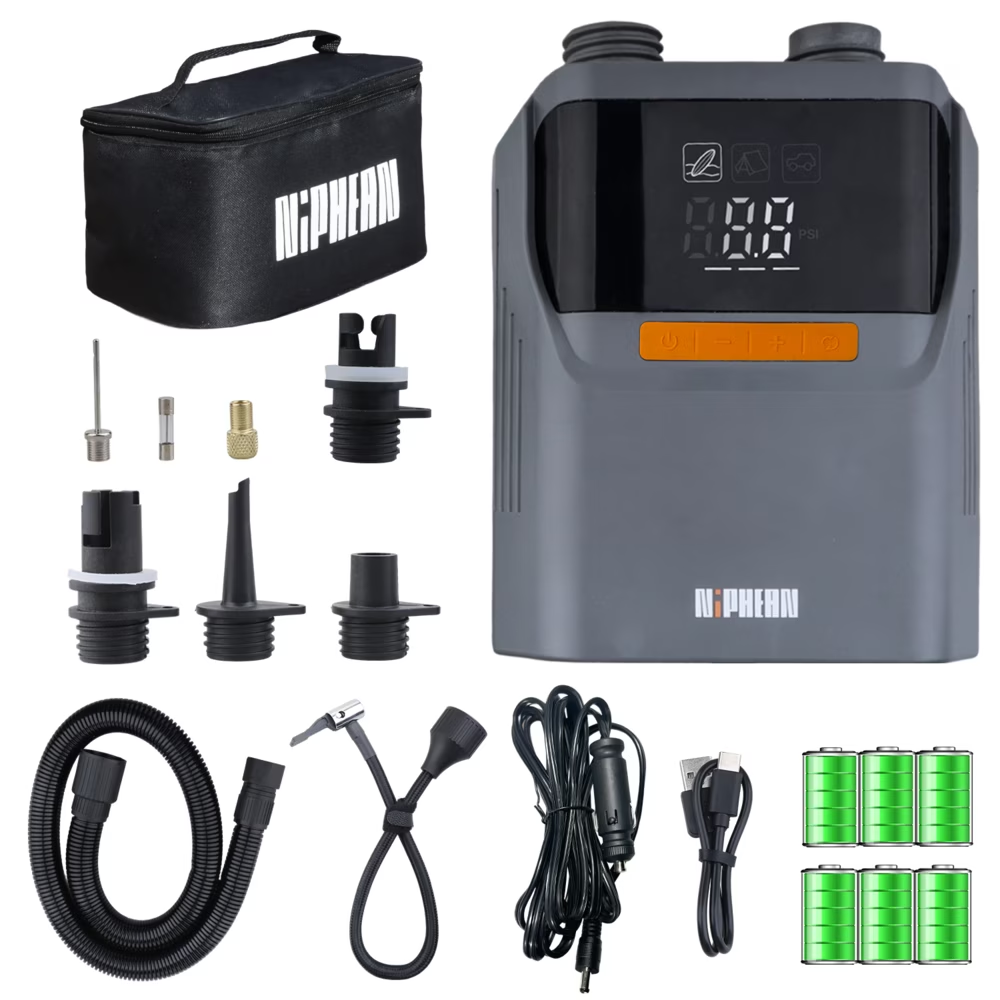
Niphean Car-Powered Electric Air Pump: the value pick for drive-up paddlers
If you always drive to the water, the Car-Powered Electric Air Pump is the one I’d hand most families. It plugs into your 12V outlet with a 1.5-meter cable, which reaches from the cigarette lighter to a board laid out behind the tailgate. You set your target pressure, press start, and walk away to wrangle sunscreen while it works. When it hits the number, it shuts off on its own. No overinflation, no standing guard.
The display is the part reviewers keep praising: large, bright, readable in direct sun, showing your current and target pressure plus your chosen units, switchable between PSI and KPA. It comes with three presets tuned for a SUP, an inflatable kayak, and a smaller ring-style float, six valve nozzles to fit most inflatables, a built-in work light, a deflation mode, and a carry bag. It earns 4.8 stars across 73 reviews, and the common refrain is some version of “this is what saved my arms.” One Florida paddler put it plainly: she bought it after a few sessions with the manual pump, and in summer heat it gave her energy back for the actual paddling. The one tradeoff is volume. This is a precise high-pressure pump, not a leaf blower, so a giant air mattress takes a while. For boards, it’s ideal.
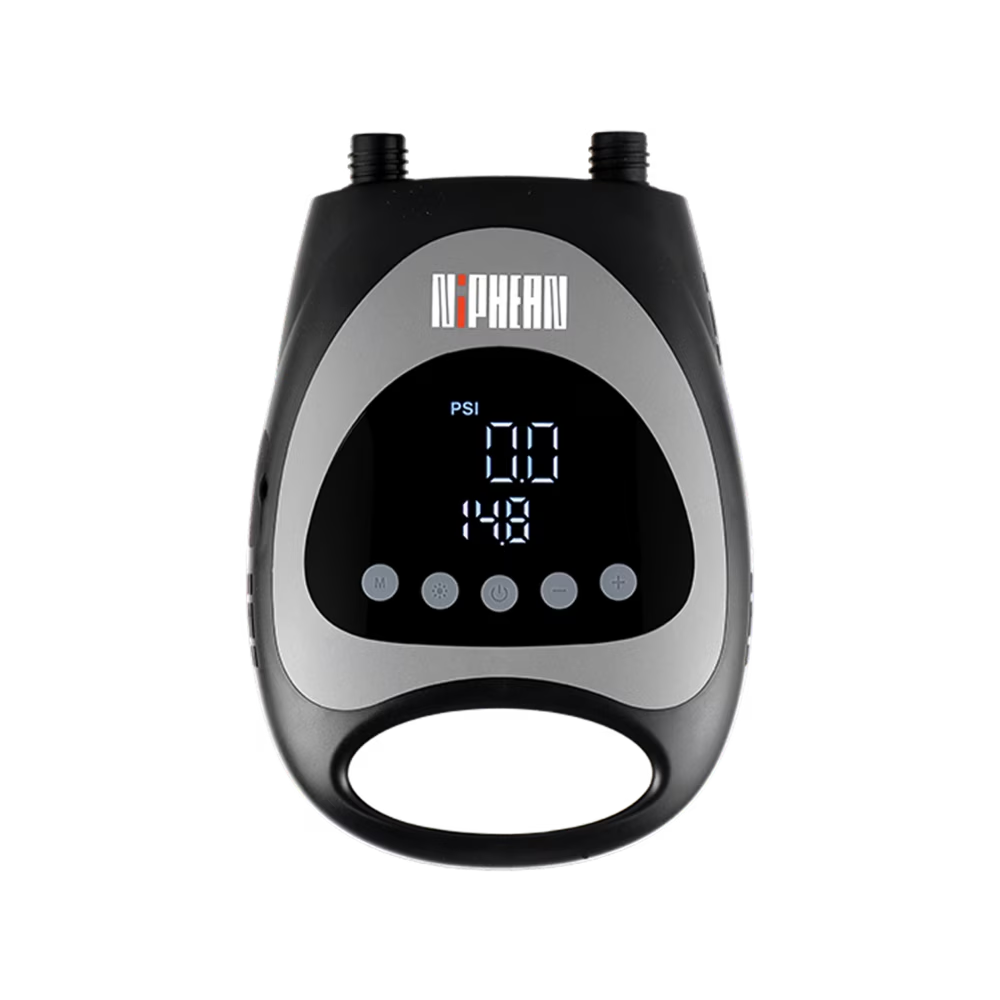
Niphean Pro Dual-Action Manual Pump: the backup that never lets you down
Then there’s the Pro Dual-Action Manual Pump, the one that made me sweat on that boat ramp and the one I still refuse to leave home without. Here’s the thing about a manual pump: it has zero failure modes. No battery to forget, no fuse to blow, no outlet to find. It just works, which is the entire reason it earns a permanent spot in the bag even after you buy an electric.
“Dual-action” means it pushes air on both the down and the up stroke, so it fills the board roughly twice as fast as a basic single-stroke pump. When the board gets firm and the pressure climbs, you flip a toggle to single-action, which lightens the effort for those last hard PSI. It tops out at 19 PSI and an iSUP only needs 12 to 15, so you have margin. The dual-scale gauge reads PSI and Bar, the hose runs 120 cm, the whole thing weighs 0.9 kg and stands 62.5 cm, and it fits the standard Halkey-Roberts valve on every Niphean board. At $69.99 it’s tied for the cheapest, and it’s the pump that turns a dead battery from a ruined day into a minor workout.
Why a SUP only needs 12 to 15 PSI
An inflatable paddle board feels rock-solid at 12 to 15 PSI, and most manufacturers cap the recommendation there. Underinflate it and the board sags in the middle, plowing water and wobbling underfoot. Push past the rating and you stress the seams for no gain in performance. This is the real argument for an electric pump with auto shut-off: it parks the board at your exact number and stops, so you get a taut deck without babysitting a gauge. The 50 PSI ceiling on the cordless unit isn’t for the board. It’s there so the same pump can handle car tires and other higher-pressure jobs. For the deeper mechanics of how these pumps work, MK Library has a thorough electric paddle board pump guide.
How to Choose, in Plain Scenarios
Specs land better when they’re attached to a real driveway. Find the situation that sounds like yours:
- You drive to a lake or boat ramp every time: The Car-Powered Electric Air Pump. Plug in, walk away, paddle. Best value, and the auto shut-off means no overinflating.
- You hike, bike, or camp to your launch: The cordless Paddle Board Pump. There’s no outlet on a trail, and a charged battery is the only power you’ll have.
- You want one pump for the board, the tires, and the pool floats: The cordless again. Its 50 PSI ceiling covers jobs a SUP-only pump can’t touch.
- You’re on a budget and don’t mind a few minutes of effort: The Pro Dual-Action Manual. Cheapest, lightest, and dual-action keeps it quick.
- You bought an electric and want insurance: Add the manual anyway. It’s the spare tire of paddle pumps. A dead battery shouldn’t end a beach day.
- You like the workout: Honestly, the manual. Some people count the pumping as part of the session. I am not those people, but I respect them.
Before you click buy
Don’t rely on a single electric pump with no backup, especially if you launch far from the car. Batteries die, fuses blow, and a $200 board is useless flat on the sand. The cheapest insurance is keeping the manual pump in your bag year-round. And whichever electric you choose, set the target pressure to your board’s rating, not the pump’s ceiling. The 50 PSI maximum on the cordless is for tires, not for the deck you’re about to stand on.
The Bottom Line
Picking a Niphean pump comes down to one honest question: where are you when the board needs air? Drive-up paddlers get the most for their money with the car-powered electric, which plugs into the 12V outlet and shuts off on its own. Anyone launching off-grid wants the cordless, the only one that owes nothing to a car or a wall. And the dual-action manual earns its keep as the backup that never quits, light enough to live in the bag forever. My setup, after the boat-ramp summer that taught me all this: an electric for the easy days, the manual riding along for the day the easy plan falls apart. Get the pump right and the board is ready before the kids finish arguing about who paddles first. That’s the whole goal.
Frequently Asked Questions
What PSI should a Niphean paddle board be inflated to?
An inflatable Niphean paddle board should be inflated to 12 to 15 PSI, the standard range for a firm, stable deck. Below that the board sags and wobbles; above it you stress the seams without paddling any better. The Pro Dual-Action Manual Pump tops out at 19 PSI, and both electric pumps let you set a target in that range so they shut off automatically at the right pressure.
Which Niphean pump is best for paddle boards?
The best Niphean pump depends on your launch. For drivers, the Car-Powered Electric Air Pump is the value pick: it plugs into a 12V outlet, hits your target pressure, and shuts off on its own. For off-grid launches, the cordless Paddle Board Pump is better because it runs on a rechargeable battery. The Pro Dual-Action Manual Pump is the lightweight, no-power backup.
Is an electric or manual pump better for an inflatable SUP?
An electric pump is easier and hits your target pressure without effort or guesswork, which is why most paddlers prefer one for daily use. A manual pump is cheaper, lighter, and never runs out of charge, making it the reliable backup. Many paddlers, myself included, own both: an electric for convenience and a manual for insurance against a dead battery.
How long does the Niphean electric pump take to inflate a board?
Both Niphean electric pumps are designed for precise high-pressure inflation rather than high-volume speed, so a paddle board fills in a few minutes while you handle other setup. Reviewers of the car-powered pump describe it as fast enough to inflate a SUP in minutes with no effort. Large-volume items like full-size air mattresses take longer, since these pumps prioritize pressure over airflow.
Does the Niphean car-powered pump work on any vehicle?
The Niphean Car-Powered Electric Air Pump plugs into a standard 12V car outlet, the kind found in nearly every vehicle, using a 1.5-meter cable. As long as your car has a working 12V or cigarette-lighter socket, it will run. It also includes preset modes for a SUP, an inflatable kayak, and a smaller ring float, plus six nozzles to fit most inflatables.
Can you overinflate a paddle board with an electric pump?
You will not overinflate if you set the target pressure correctly, because both Niphean electric pumps have an auto shut-off that stops at your chosen number. The risk comes from setting the target to the pump’s maximum instead of the board’s rating. Always set it to 12 to 15 PSI for a SUP, not to the cordless pump’s 50 PSI ceiling, which exists for tires and other higher-pressure jobs.
What does “dual-action” mean on the manual pump?
Dual-action means the pump pushes air on both the down and the up stroke, filling the board about twice as fast as a single-action pump. The Niphean Pro Dual-Action Manual Pump also has a toggle that switches to single-action for the final high-pressure stretch, which lightens the effort once the board gets firm. It tops out at 19 PSI, comfortably above the 12 to 15 a SUP needs.
Do I still need a manual pump if I buy an electric one?
You don’t strictly need one, but a manual pump is cheap insurance against a dead battery, a blown fuse, or a forgotten charger. At 0.9 kg the Niphean Pro Dual-Action Manual Pump is light enough to leave in your gear bag permanently. For anyone launching far from the car, carrying a manual backup is the difference between a minor workout and a ruined day on the sand.
Will these pumps fit other brands of paddle board?
The Niphean manual pump uses a standard Halkey-Roberts valve fitting, the most common valve on inflatable SUPs, so it works with most major board brands, not just Niphean. The electric pumps include a set of six nozzle adapters that fit most inflatables and valve types. Check that your board uses a Halkey-Roberts valve, and any of the three pumps should connect.
Which Niphean pump is the cheapest?
The Car-Powered Electric Air Pump and the Pro Dual-Action Manual Pump are tied as the cheapest at $69.99 each. The cordless Paddle Board Pump costs more at $120 on sale, reflecting its built-in rechargeable battery and higher 50 PSI ceiling. For the lowest price with the most convenience, the car-powered electric is the strongest value if you drive to your launch.


